
India Apparel Sourcing: Bangladesh’s Order Shift Tests India’s Manufacturing Readiness
- November 28, 2026
- Posted by: Amol Kumar
- Category: Industry Trends
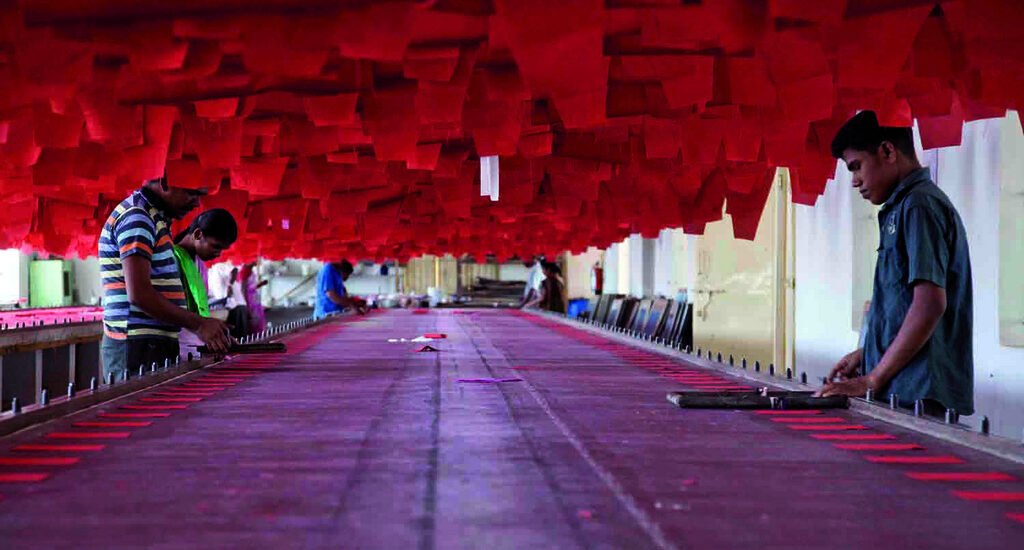
India apparel sourcing is receiving renewed attention as labour unrest and production interruptions in Bangladesh prompt international fashion buyers to move orders across Asia. A Reuters report published on 27 November said global brands had diverted approximately US$254 million of orders from Bangladesh between 1 and 18 November, with most of the business moving to India. The development is significant, but it should not be mistaken for a permanent transfer of market share. Buyers are responding to delivery risk, not simply changing their preferred country of origin.
For Indian manufacturers, the immediate question is whether they can absorb additional orders without compromising price, quality or shipment reliability. For investors and policymakers, the larger question is whether this episode can accelerate a structural shift from India’s established strength in fibre, yarn and fabric towards higher-value finished apparel. The opportunity is arriving at a moment when India’s apparel exports have been under pressure, global buyers are consolidating supplier bases, and trade-policy uncertainty is influencing sourcing decisions.
The strategic conclusion is clear: Bangladesh’s disruption has opened a commercial window, but India’s ability to retain the business will be determined inside factories and across supply chains. Additional orders will become durable export growth only if manufacturers can demonstrate repeatable execution.
The Sourcing Shock
The latest order movement is rooted in a prolonged period of labour unrest in Bangladesh’s ready-made garment industry. Factory closures, worker demonstrations, road blockades and production interruptions have affected the country’s principal apparel manufacturing belts. The government-approved 36% increase in the minimum wage has not ended the dispute; the increase fell short of workers’ demands and was followed by further demonstrations. Manufacturers have also reported energy shortages, higher input costs and uncertainty around uninterrupted production.
Bangladesh’s garment sector is deeply integrated into global retail supply chains. It accounts for more than 80% of the country’s export earnings and a substantial share of manufacturing employment. The Bangladesh Garment Manufacturers and Exporters Association (BGMEA) reported that 317 surveyed factories incurred around US$428 million in production losses during the first 18 days of November. The association also estimated that orders worth US$254 million had shifted to other countries. The survey covered only a portion of affected factories, so the figures should be treated as a reported minimum picture rather than a complete industry census.
Reuters subsequently reported that brands including Zara, H&M, Marks & Spencer and Celio were among retailers whose orders had been diverted, based on interviews with three factory owners. The companies did not independently confirm the individual order movements to Reuters. That distinction matters: the US$254 million figure is an industry-reported estimate, and the exact destination, product mix and duration of each order transfer are not publicly disclosed.
The commercial signal is meaningful because buyers operate to seasonal calendars and inventory commitments. Disruption can trigger overtime, air freight, cancellations or supplier changes. Once an alternative factory passes quality, social-compliance and technical audits, a temporary allocation can become a route to repeat orders.
An Uneven Opportunity
India has emerged as the largest immediate beneficiary of the reported diversion, but it is not the only alternative. Vietnam, Cambodia and Indonesia are also receiving buyer attention. Reuters cited industry sources indicating that rival Asian sourcing hubs can typically complete production and delivery in roughly 60–90 days, compared with about 120 days in Bangladesh during the current disruption. The same reporting indicated that India could offer buyers a delivery advantage of approximately one week, although actual lead times vary by product, factory, raw-material availability and shipping route.
This is not a simple contest over wage rates. Large retailers evaluate the full landed cost and the probability of receiving the right product at the right time. A supplier offering a lower sewing price can still be commercially unattractive if fabric approvals are delayed, trims are unavailable, rework is high or the shipment misses the retail window. Conversely, a supplier with a slightly higher unit cost may win business if it provides dependable delivery, transparent production visibility and lower inventory risk.
| Sourcing factor | Current signal | Commercial implication |
|---|---|---|
| Bangladesh | Production disruption, wage negotiations and energy constraints | Buyers are adding contingency suppliers and reallocating urgent orders |
| India | Largest reported recipient of diverted orders; established textile clusters | Opportunity to secure trial orders and convert them into approved supplier relationships |
| Vietnam and Cambodia | Also benefiting from sourcing diversification and shorter reported lead times | India must compete on execution, product capability and total landed cost |
| Indonesia | Part of the wider alternative-sourcing set | Global buyers are more likely to diversify across several countries than replace one dependency with another |
The implication for Indian exporters is that the opportunity should be pursued selectively. A factory should not accept every inquiry simply because a buyer is moving production out of Bangladesh. It should identify the product categories where its machinery, workforce, fabric access and quality systems already match the buyer’s requirements. Overcommitting capacity can turn a sourcing opportunity into a delivery failure.
India Apparel Sourcing: Export Baseline
The timing is attractive, but India’s starting position is mixed. Ministry of Textiles data show that exports of textiles and apparel, including handicrafts, reached ₹3.25 lakh crore in FY2025–26, up 1.8% from the previous year. This is a broad category that includes products beyond finished garments. It should not be compared directly with apparel-only export figures.
More recent monthly data show a sharper contrast between upstream textiles and finished apparel. The Confederation of Indian Textile Industry’s analysis of October 2026 quick estimates reported that textile exports increased 11.97% during April–October 2026 compared with the same period a year earlier, while apparel exports declined 2.97%. October itself was stronger: apparel exports rose 20.33% year on year to approximately US$1.29 billion. The monthly rebound is encouraging, but it does not erase the cumulative weakness recorded over the first seven months.
A CII–BCG report released on 23 November adds a structural explanation. It estimates India’s textile and apparel industry at US$190–200 billion and its workforce at more than 45 million, yet places India’s share of global apparel exports at only around 3%. Textile and apparel exports have remained broadly around US$37 billion for much of the past decade. The report argues that achieving the national ambition of US$100 billion in exports by FY2031 would require a substantial acceleration in growth and a stronger position in finished garments.
| Indicator | Latest reported position | How to interpret it |
|---|---|---|
| Textiles, apparel and handicrafts exports | ₹3.25 lakh crore in FY2025–26; up 1.8% | Broad sector export growth remains positive but moderate |
| Apparel exports, April–October 2026 | US$8.57 billion; down 2.97% year on year | The current sourcing opportunity arrives against a soft cumulative base |
| Apparel exports, October 2026 | US$1.29 billion; up 20.33% year on year | A positive monthly signal that needs to be sustained |
| India’s global apparel export share | Approximately 3% | There is headroom, but capacity alone has not translated into global share |
For India apparel sourcing to become a sustained growth engine, the country must convert its large textile base into competitively priced, export-ready garments. A surge in buyer inquiries will not automatically close the gap. Downstream conversion, product range, factory scale and delivery performance need to improve together.
Tiruppur’s Immediate Advantage
Tiruppur is among the clusters best positioned to respond because it already has a dense knitwear ecosystem. Spinning, knitting, dyeing, printing, garmenting, embroidery, finishing and export services are distributed across a network of specialised enterprises. This structure allows an exporter to coordinate production across multiple units rather than owning every process within one factory. It also creates a base of experienced suppliers and workers who understand export specifications.
The New Indian Express reported on 28 November that the Tiruppur Exporters’ Association sees the possibility of export growth of around 20% by the end of the current financial year as buyer inquiries increase. The same report quoted the association’s president cautioning that the exact scale of the order shift is still too early to quantify. That caution is important. An increase in inquiries is not equivalent to confirmed purchase orders, and confirmed orders are not equivalent to shipped and paid-for exports.
The report placed Tiruppur’s knitwear exports at approximately ₹42,544 crore in FY2025–26 and cited employment of around one million people in the hub, with migrant workers accounting for roughly half of the workforce. These figures underline both the cluster’s scale and its exposure to labour availability. If orders accelerate, workforce planning, worker accommodation, transport, retention and skills development will become immediate operating priorities.
Tiruppur is not the only potential beneficiary. Noida and the wider National Capital Region have established apparel manufacturing and export networks. Bengaluru, Ludhiana, Ahmedabad, Surat and other clusters have capabilities across different garment, fabric and textile categories. The opportunity is therefore national, but it will not be evenly distributed. Buyers will shortlist suppliers based on the specific product, machinery, compliance record, capacity and delivery profile they require.
The Execution Gap
India’s main constraint is not the absence of factories. It is the uneven ability to coordinate fragmented capacity at the speed and reliability expected by global retailers. Many apparel exporters depend on external suppliers for fabric, processing, trims, washing, printing and finishing. That model can be efficient when production plans are stable and supplier relationships are disciplined. It becomes fragile when a buyer asks for a compressed lead time or changes specifications late in the order cycle.
Weaknesses often sit between production stages: late fabric, constrained dyeing or finishing, missing trims and rework at final inspection. A factory may have enough sewing machines but still lack the coordinated throughput needed to ship on time.
Labour availability is another constraint. The Tiruppur cluster’s dependence on migrant workers makes retention and workforce continuity commercially important. A factory that recruits rapidly without adequate training may increase headcount but not effective output. Supervisors, line balancing, standard operating procedures, incentive design and worker welfare all influence productivity. Sustainable growth requires a stable workforce, safe working conditions, fair treatment and credible grievance channels—not simply longer shifts.
Raw-material access also affects competitiveness. Cotton price volatility, import duties, availability of quality yarn and the growing importance of man-made fibres can influence the cost and product range that Indian suppliers offer. The latest discussion among Tiruppur exporters has included a request for temporary removal of cotton import duty. However, a durable export strategy cannot rely only on a single input-duty concession. It needs predictable access to cotton, polyester, viscose, specialty yarns, trims and chemicals, supported by transparent sourcing and quality assurance.
India also needs to expand in synthetic and blended-fibre categories used in sportswear, activewear, outerwear and performance apparel. A narrow focus on cotton basics may win urgent knitwear orders but leave higher-value categories to competitors. Fabric development, functional finishes, recycling, testing and product engineering can widen the addressable market.
Trade Access Matters
Market access can improve the economics of Indian sourcing, but tariffs are only one part of the decision. On 25 November, the US Trade Representative said the tariff on Indian imports would be capped at 17% if a bilateral trade deal is concluded, while the rate could rise to 25% without an agreement. This is a broad trade-policy signal rather than an apparel-specific tariff schedule. For exporters, the key issue is the final product-level treatment, the timing of any agreement and the certainty buyers can use when negotiating future-season prices.
The United States and European Union are major markets, but concentration increases exposure to tariff, demand and compliance changes. Exporters should assess market-level economics and diversify customers across North America, Europe, the United Kingdom, the Middle East and Japan.
India’s expanding network of trade agreements will matter only if firms use the preferences available to them. On 27 November, RBI Governor Sanjay Malhotra highlighted that only around 20–30% of eligible Indian exports were taking advantage of lower tariffs under free trade agreements, compared with 60–70% utilisation by partner-country exporters to India. The implication for apparel MSMEs is practical: rules of origin, supplier declarations, product classification, documentation and customs procedures must be built into export operations. A tariff concession that is not claimed does not improve landed cost.
Compliance is also moving beyond the final product. International buyers increasingly expect visibility into fibre origin, processing facilities, chemical management, wastewater treatment, labour practices and environmental performance. Suppliers that can produce consistent documentation and respond quickly to audits are more likely to qualify for repeat business. For textile clusters, shared testing laboratories, wastewater infrastructure, traceability systems and common compliance services can reduce the burden on smaller units.
Investor Implications
For investors, the most attractive opportunities may not be limited to large garment exporters. The order shift can create demand across the supporting ecosystem: knitting, processing, dyeing, finishing, technical textiles, trims, packaging, testing, logistics, industrial engineering, automation and enterprise software. Businesses that solve a recurring bottleneck for several exporters may benefit from broader cluster growth rather than depending on one buyer or one factory.
However, investors should distinguish between a temporary utilisation spike and a durable improvement in cash generation. A factory can report a full order book while facing thin margins, high working-capital requirements and delayed receivables. A sudden increase in production can also require upfront spending on yarn, fabric, trims, labour and freight before the exporter receives payment. Growth without adequate working capital can weaken an otherwise healthy supplier.
Due diligence should test confirmed purchase orders versus forecasts, repeat versus trial business, cancellation terms, buyer approval of factories and subcontractors, and the ability to meet lead times without excessive overtime or air freight. Customer concentration, product mix, utilisation, defects, on-time-in-full performance and receivable days matter as much as revenue growth.
Stage capital expenditure against verified demand. Automated cutting, digital pattern-making, production planning, line monitoring, inspection and energy efficiency can lift throughput before a factory expands. In some clusters, shared infrastructure and coordinated subcontracting may outperform duplicating every process in-house.
A Practical Playbook
Manufacturers that want to convert current buyer interest into long-term sourcing relationships should move through a disciplined sequence rather than pursue volume indiscriminately.
- Map buyer demand. Identify the product categories, price bands, order quantities, compliance requirements and delivery windows being shifted. Separate urgent replacement orders from future-season sourcing programmes.
- Audit real capacity. Calculate available line hours, bottleneck-stage capacity, workforce availability, subcontractor reliability and planned maintenance. Use realistic output assumptions rather than installed machine counts.
- Secure inputs. Confirm yarn, fabric, trims, dyes and packaging availability before accepting delivery commitments. Build contingency suppliers for critical inputs and validate quality before bulk production.
- Protect unit economics. Recalculate landed cost after freight, financing, compliance, rework and possible overtime. Do not win an order at a price that becomes unprofitable when production is accelerated.
- Synchronise suppliers. Share order forecasts, production milestones and quality specifications across mills, processors, garment units and finishing partners. Establish escalation protocols for delays.
- Prove delivery. Track sample approval time, cut-to-ship lead time, first-pass quality, on-time-in-full delivery and air-freight dependence. Provide buyers with credible production visibility.
- Build buyer trust. Complete audits, maintain worker records, document subcontracting, strengthen traceability and resolve non-conformities quickly. Convert trial orders into a structured account-development plan.
Policymakers can reinforce this response by improving access to working capital, strengthening cluster infrastructure, supporting worker housing and transport, expanding technical training, improving logistics and enabling shared testing and certification facilities. Incentives should reward productivity, value addition, environmental performance and sustained employment rather than capacity announcements alone.
Industry associations can play a coordinating role by aggregating buyer requirements, mapping available capacity, identifying common input shortages and connecting smaller units with exporters that have approved buyer relationships. A transparent cluster-level capacity map would help buyers identify credible suppliers while reducing the risk of unrealistic order allocation.
Outlook and Scenarios
Over the next three to six months, the most likely outcome is selective order reallocation rather than a wholesale migration from Bangladesh. Some urgent orders may remain with Indian suppliers, while other buyers will split production among India, Vietnam, Cambodia and Indonesia. If labour conditions in Bangladesh stabilise, some production may return; however, buyers that have qualified alternative suppliers may retain a broader sourcing portfolio to reduce future disruption risk.
Over a 12–24 month horizon, the more important signal for India apparel sourcing will be repeat orders. If Indian factories receive follow-on business after the immediate disruption, it will indicate that buyers are satisfied with quality, price and execution. If inquiries fail to convert or orders are not repeated, the current movement will have been a temporary response to supply-chain stress rather than a structural gain for India.
The upside scenario requires coordinated improvements in productivity, labour availability, product diversification, raw-material access, compliance and trade certainty. Under this scenario, Indian suppliers use the current opening to secure buyer approvals, deepen relationships and expand into higher-value categories. The downside scenario is equally plausible: factories accept more orders than they can execute, costs rise, shipment performance deteriorates and buyers shift the next season’s production to competing hubs.
India does not need to replace Bangladesh to benefit. Even a modest increase in the share of global apparel orders can create meaningful opportunities across labour-intensive manufacturing clusters. But the sector should resist the temptation to treat a competitor’s disruption as a substitute for domestic reform. The country’s long-term export ambition depends on moving beyond upstream scale towards integrated, reliable and differentiated finished-garment production.
What Leaders Should Watch
Executives should monitor five indicators through the coming quarters: the proportion of diverted orders that become confirmed Indian purchase orders; repeat-order conversion after initial trial production; apparel export growth relative to textile exports; on-time-in-full delivery and air-freight dependence across major clusters; and the effective tariff and rules-of-origin position in priority markets. Together, these measures will reveal whether the current opportunity is translating into durable competitiveness.
For manufacturers, the immediate priority is to be a dependable supplier before becoming a larger supplier. For investors, it is to back businesses with repeatable operating performance and disciplined working-capital management. For policymakers, it is to remove structural constraints that prevent smaller units from participating in global value chains. For buyers, India can become a more important sourcing partner when it offers a combination of scale, transparency, compliance and predictable execution.
The Bangladesh disruption has made the opportunity visible. India’s next task is to make its manufacturing system reliable enough for global buyers to stay.
Image attribution: Fabrics for Freedom, “India textile fashion industry workers,” licensed under Creative Commons Attribution 2.0, via Wikimedia Commons. Image source · CC BY 2.0 licence.
For organisations assessing new export markets, supplier ecosystems, manufacturing capacity or competitive positioning, explore 6thVeda Consulting’s market research and consulting services.