
Türkiye’s $1.6 Billion COP31 Climate Deal Puts Carbon Markets and Industrial Competitiveness in Focus
- November 26, 2026
- Posted by: Amol Kumar
- Category: Industry Trends
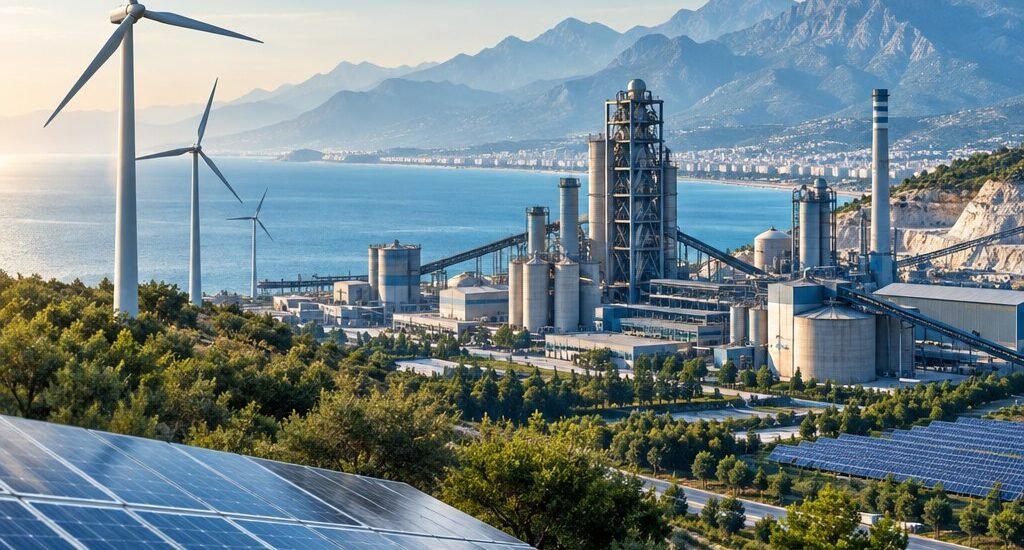
The Türkiye climate deal pairs AIIB’s record climate-policy financing package with reforms designed to turn the country’s climate law and 2035 emissions pathway into regulatory and investment action. For exporters, manufacturers and capital providers, the bigger story is the convergence of domestic carbon pricing, EU market access, energy security and climate resilience.
Executive perspective | 26 November 2026
Türkiye’s USD 1.6 billion financing agreement with the Asian Infrastructure Investment Bank (AIIB), signed during COP31 in Antalya on 12 November, is more than a climate-finance announcement. It is a sovereign reform programme intended to connect national climate commitments with emissions trading, green finance regulation, industrial decarbonisation and adaptation planning. AIIB describes it as the largest climate-focused policy-based financing package in its history. The programme supports implementation of Türkiye’s Climate Law and its second Nationally Determined Contribution, including a 2035 emissions target and the longer-term objective of net-zero emissions by 2053.
The timing is commercially significant. The European Union’s Carbon Border Adjustment Mechanism (CBAM) entered its definitive regime on 1 January 2026. Türkiye’s exporters in carbon-intensive value chains therefore face a changing cost of market access at the same time that the country is building its own emissions trading system (ETS). The policy question is no longer whether carbon measurement and pricing will influence trade; it is how quickly companies can measure, reduce, verify and finance their embedded emissions.
What the Financing Covers
The AIIB package combines USD 800 million in Climate-Focused Policy-Based Financing for the Türkiye Climate Action Acceleration Program (TCAAP) with USD 800 million in supplemental financing under the bank’s Energy, Food Security and Economic Resilience Facility. AIIB’s project documentation records total approved sovereign financing of USD 1.6 billion, with approval on 22 October 2026. The agreement was publicly signed during COP31.
The programme is structured around three mutually reinforcing pillars:
| Reform pillar | Policy direction | Commercial relevance |
|---|---|---|
| Sustainable finance and carbon markets | Operationalise the national ETS and develop a green-finance regulatory architecture. | Creates a framework for carbon-cost visibility, transition finance, emissions data and capital allocation. |
| Sectoral decarbonisation | Translate national targets into mitigation measures across energy, industry, transport and monitoring systems. | Raises the importance of plant-level efficiency, clean power, process changes and verified emissions reductions. |
| Climate resilience | Strengthen adaptation planning across water, ecosystems, health and local government. | Addresses operational risks to factories, agriculture, logistics, infrastructure and supply continuity. |
The programme is led by the Government of Türkiye, with the Ministry of Treasury and Finance as executing agency and the Ministry of Environment, Urbanization and Climate Change responsible for the technical climate agenda. Implementation involves financial, energy-market and other regulatory institutions, as well as local climate governance across all 81 provinces. This cross-government design matters: industrial transition depends on more than an environmental ministry. It requires consistent rules across finance, energy, trade, investment and regional planning.
Carbon Pricing Meets Trade
The most immediate commercial implication is the interaction between Türkiye’s emerging ETS and the EU CBAM. The EU mechanism applies from 1 January 2026 to selected imports in cement, iron and steel, aluminium, fertilisers, electricity, hydrogen and certain related products. EU importers covered by the rules must account for embedded emissions and surrender certificates; a carbon price effectively paid in the country of production may be recognised through a corresponding deduction, subject to the applicable rules and evidence.
That creates a strong incentive for Türkiye to establish a credible domestic carbon-pricing system. If Turkish producers face a domestic carbon cost that is measurable, verified and recognised under EU rules, some carbon-cost value may remain within the Turkish economy rather than being paid entirely through the EU mechanism. However, this is not an automatic offset. Recognition depends on the carbon price actually paid, the relevant product emissions, documentation and the detailed CBAM methodology. Companies should not assume that the existence of a Turkish ETS alone guarantees a lower CBAM bill.
Türkiye’s ETS is moving through a staged implementation pathway. The pilot phase began in 2026 and is expected to run through 2027, ahead of a first implementation period from 2028. The pilot is intended to establish emissions monitoring, reporting and verification processes and test allocation and benchmarking rules. The Climate Action Acceleration Program includes a target for at least 180 facilities to report baseline emissions by April 2027. For industrial operators, the practical priority is to build reliable installation-level data now rather than wait for the first full compliance period.
In parallel, Türkiye’s Ministry of Trade published an updated Green Deal Action Plan for 2026–2030. It connects the green transition with industrial policy, energy security, trade and competitiveness, and identifies development of the national ETS and a national CBAM framework among its carbon-pricing priorities. This signals a broader policy architecture: domestic carbon pricing, export-market alignment, green finance and industrial modernisation are being treated as connected issues rather than isolated climate initiatives.
Where Industry Feels the Impact
Iron and steel
Steelmakers are exposed to both direct process emissions and electricity-related emissions, with performance varying substantially by production route, raw-material mix, scrap availability and power sourcing. For exporters, the competitive question will increasingly include verified emissions per tonne of product, not just the ex-works price. Investment priorities may include energy efficiency, higher scrap utilisation where technically and commercially feasible, process optimisation, low-carbon electricity procurement and preparation for lower-emissions production routes. Firms should model the economics of carbon costs alongside input costs, capacity utilisation and customer specifications.
Cement and building materials
Cement producers face the combined challenge of process emissions from clinker production and energy-related emissions. Blended cement, clinker substitution, alternative fuels, thermal efficiency and improved process controls can provide near- and medium-term levers, subject to product standards and the availability of suitable supplementary cementitious materials. Türkiye’s COP31 support for an international push on lower-carbon blended cement reinforces the direction of travel, but adoption depends on standards, reliable material supply, customer acceptance and procurement practice. For construction buyers, embodied-carbon disclosure and lower-carbon material specifications may become more important procurement differentiators.
Aluminium and fertilisers
Aluminium competitiveness is closely linked to electricity cost and carbon intensity. Access to reliable renewable power, long-term power contracts, operational efficiency and traceable electricity attributes can influence the emissions profile of production. Fertiliser producers face emissions and energy exposure through feedstock and manufacturing processes. In both sectors, measurement quality and product-level traceability will be essential if companies are to substantiate lower-emissions claims to customers and regulators.
Electricity and transport
Power-sector decarbonisation can reduce indirect emissions across industrial supply chains, while grid reliability and affordability remain essential to manufacturing competitiveness. The programme’s renewable-energy and sectoral policy measures should therefore be assessed not only by installed capacity but also by grid integration, transmission investment, storage, dispatchability and the ability of industrial users to contract clean power. Transport decarbonisation also affects logistics costs, fleet investment and the emissions intensity of exported goods.
Capital Allocation and Investment
The USD 1.6 billion package is sovereign policy-based financing, not a direct grant pool for every factory seeking to retrofit equipment. Its potential multiplier effect depends on whether reforms improve the predictability of regulation, strengthen project preparation and help crowd in commercial lenders, institutional investors and private operators. Türkiye has indicated a need for substantial additional climate investment through 2030, with private capital expected to play a major role. The policy package is therefore best understood as an enabling platform rather than a complete funding solution.
For banks and investors, the opportunity is to finance assets with measurable transition outcomes: renewable generation, grid infrastructure, industrial energy efficiency, electrification, process heat, water efficiency, waste-heat recovery, low-carbon materials and climate-resilient infrastructure. But underwriting discipline remains essential. Projects need credible baselines, engineering assessments, realistic operating assumptions, transparent emissions accounting and a clear view of regulatory exposure. A “green” label cannot compensate for weak project economics or uncertain execution.
For corporate finance teams, the cost of capital may increasingly reflect transition readiness. Lenders and buyers will want evidence that a company can identify its emissions exposure, set a credible investment plan and report progress. Firms that develop this capability early may be better positioned to access sustainability-linked financing, supplier programmes and long-term customer contracts. Those that delay could face higher compliance costs, more expensive retrofits and reduced flexibility when buyers tighten procurement standards.
Climate Resilience as an Operating Issue
The third pillar of the programme expands the discussion beyond carbon. Türkiye faces exposure to water scarcity, drought, extreme heat, wildfires and urban flooding. These hazards can interrupt production, constrain water-intensive industries, affect agricultural yields, damage transport links and increase insurance and infrastructure costs. Climate adaptation is therefore an issue of business continuity and asset protection, not only public environmental policy.
AIIB and programme reporting identify targets that include supporting 225,000 farmers in water-stressed basins to shift towards less water-intensive crops and designating 50,000 hectares as carbon sinks by 2028. These targets connect agricultural adaptation, land management and carbon sequestration. Their real value will depend on implementation quality: water savings must be measurable, crop transitions must preserve farm economics, and carbon-sink projects require credible monitoring, permanence and safeguards against double counting.
Manufacturers should conduct site-level assessments of water dependency, heat exposure, flood risk, energy continuity and supplier concentration. Businesses with geographically concentrated production or water-intensive processes may need contingency sourcing, recycling and reuse systems, cooling-efficiency upgrades, flood protection and more robust supplier risk monitoring. Investors should test whether climate hazards are reflected in asset valuations, insurance assumptions and long-term cash-flow models.
COP31: Implementation and Limits
COP31 concluded in Antalya on 22 November, with the UNFCCC reporting important progress on a just transition, climate finance, adaptation and electrification. However, countries did not reach agreement on the presidency-led overarching cover decision, with consequences for several linked negotiating issues. The outcome is mixed: implementation-oriented initiatives and sectoral commitments advanced, but the conference did not deliver a unified political decision across the full agenda.
That distinction matters when interpreting the AIIB package. The financing agreement is a specific, approved sovereign programme with defined policy pillars and implementation responsibilities. It should not be confused with a universal COP31 agreement or a guarantee that all announced climate initiatives will be delivered on schedule. For companies, the useful signal is the domestic reform agenda and the EU trade rules already in force—not the headline count of COP announcements.
Executive Priorities
Boards and senior management teams with Turkish operations, suppliers or customers should translate the policy shift into a practical workplan:
- Map CBAM exposure: identify affected product lines, EU-bound shipments, embedded-emissions data requirements and contractual responsibility for reporting and certificates.
- Build installation-level MRV: establish auditable energy, fuel, process and production data, with clear ownership and controls for emissions calculations.
- Model carbon-cost scenarios: test different allowance prices, free-allocation assumptions, output levels and investment pathways rather than relying on a single forecast.
- Prioritise abatement economics: rank efficiency, electrification, renewable power, process substitution and material changes by cost per tonne of emissions avoided and operational impact.
- Engage lenders early: prepare bankable project documentation, transition plans, capital expenditure schedules and measurable performance indicators.
- Stress-test physical risk: evaluate water, heat, flood and wildfire exposure across facilities, logistics routes and critical suppliers.
- Track regulatory detail: monitor ETS rules, benchmark and allocation methodologies, verification requirements and the development of Türkiye’s national CBAM framework.
Strategic Outlook
Türkiye’s AIIB agreement places carbon markets and industrial competitiveness at the centre of its climate transition. Its significance is not the headline financing amount alone, but the attempt to align fiscal support, carbon regulation, sectoral policy, green finance and adaptation across government. If implementation is credible, the programme could help Turkish industry build the measurement systems and investment pipeline required to respond to changing export-market conditions.
The transition will nevertheless be uneven. Carbon-intensive producers with limited access to capital, older assets or weak emissions data may face a difficult adjustment. Companies with efficient operations, clean-power access, strong reporting and disciplined investment plans could gain an advantage in procurement and financing. The policy framework creates an opportunity; it does not guarantee the outcome.
For international investors and suppliers, Türkiye should be assessed as both an industrial market undergoing regulatory change and a potential platform for lower-carbon production serving regional value chains. The investment case will depend on sector exposure, energy economics, the pace of ETS implementation, EU trade rules and the ability of firms to convert policy signals into operational improvements. The next test is execution: whether the 2026–2027 pilot period produces reliable emissions data, credible institutions and projects that can attract private capital.
Explore 6thVeda’s research and consulting services for market intelligence, competitive assessment and strategic decision support. Learn more about 6thVeda Consulting.
Sources and References
- Asian Infrastructure Investment Bank, “AIIB and Türkiye Sign USD1.6 Billion Package to Accelerate Climate Reforms,” 12 November 2026: AIIB announcement.
- AIIB, Türkiye Climate Action Acceleration Program project summary and financing details: Project documentation.
- UNFCCC, “COP31 delivers progress that advances implementation of the Paris Agreement, but stalls on range of key issues,” 23 November 2026: COP31 outcome.
- European Commission, Carbon Border Adjustment Mechanism definitive regime: CBAM rules from 1 January 2026.
- European Commission, CBAM certificate pricing: Quarterly certificate prices for 2026.
- Republic of Türkiye Ministry of Trade, Green Deal Action Plan 2026–2030: Government action plan.
- Partnership for Market Implementation, “Pilot Phase of Türkiye ETS Moves into Implementation,” 4 November 2026: ETS pilot update.
- Reuters, “COP31 host Turkey, AIIB strike record $1.6 billion climate policy deal,” 12 November 2026: Reporting on financing and implementation targets.
Editorial note: This article reflects information available as of 26 November 2026. Financing commitments, programme targets and regulatory milestones are described as announced or planned; they should not be interpreted as completed outcomes unless expressly stated.